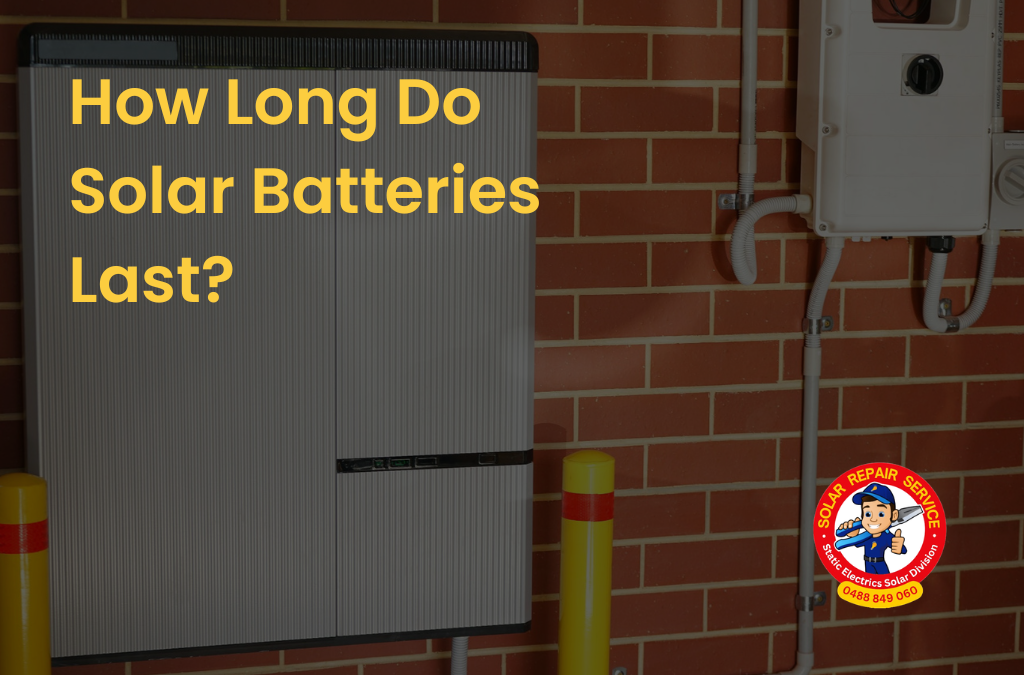
If you’re considering adding a solar battery to your setup, this is probably the first thing you’re wondering:
How long do solar batteries last?
The short answer? Most quality lithium-ion batteries last 10 to 15 years, and many come with warranties of around 10 years or a set number of charge cycles.
But we’re going to have to unpack this properly – because as with most things in the solar world, the real answer depends on a few important factors. And for solar batteries, they’re pretty specific:
1. Battery chemistry
When people ask how long do solar panel batteries last, it’s important to understand just how heavily the answer depends on the technology inside them.
That’s because older lead-acid batteries typically lasted 3-7 years. But modern lithium-ion batteries – which are now standard in most home installations – are far more durable and cycle-efficient.
So when asking how long do home solar batteries last today, we’re talking about advanced lithium technology designed specifically for daily residential cycling.
2. Cycle life rating
Every time your battery charges and discharges, that’s one cycle.
Manufacturers rate batteries for a certain number of cycles – it’s often 6,000 to 10,000-plus cycles for quality systems. So the more cycles it’s built to handle, the longer it will last under normal use.
If a battery cycles once per day, 6,000 cycles equates to well over 10 years of operation. This is one of the biggest technical factors behind lifespan.
3. Depth of discharge
Depth of discharge refers to how much of the battery’s capacity is used each time.
Put simply, regularly draining a battery to nearly empty puts more stress on it. Systems that operate within healthy charge limits tend to last longer.
Modern systems are programmed to manage this automatically – but proper configuration still matters. A lot.
4. Temperature & installation location
When homeowners like you are asking how long do solar batteries last in Australia specifically, they’re really thinking about our conditions here. And our climate, specifically.
Think of it like this – more heat shortens battery life. It’s just that simple. That’s why installation location is so incredibly critical.
A battery mounted in a shaded, ventilated area will last longer than one installed in direct sun or a poorly ventilated space.
And good installation starts protecting your investment from day one.
5. Correct system sizing
A battery that’s too small for your household usage will charge and discharge aggressively every single day, over and over again. All that does is accelerate wear.
A correctly sized home battery, however, spreads energy use more evenly and avoids extreme cycling. In other words, it can do what it’s designed to do.
This is why focusing purely on solar battery price can be misleading. The cheapest or smallest option won’t be the most economical long term if it wears out faster.
6. Inverter compatibility & system design
Your battery doesn’t operate in a vacuum – it works as part of your overall solar system.
So, if your inverter isn’t properly matched, or if your system wasn’t designed with storage in mind, performance and longevity can suffer.
A properly integrated setup ensures:
- Efficient charging
- Stable operation
- Minimal stress on components.
7. Usage patterns
The way you use energy matters.
Households that rely heavily on battery discharge every evening will naturally cycle the system more than homes that use less stored energy.
We’re not saying that heavy use is bad at all – batteries are designed specifically for daily cycling – but higher usage does move you through your cycle count faster.
8. Ongoing monitoring & maintenance
Most modern batteries include fairly impressive monitoring software these days. And there are a few things related to that which can extend lifespan quite a bit:
- Keeping the firmware updated
- Checking alerts
- Having periodic system inspections.
If we can catch small issues early, the huge benefit is preventing larger problems down the road.
A quality solar battery connected to well-installed solar panels that are properly monitored can easily sit in that 10-15 year lifespan range. And maybe even more.
So, how long do solar batteries last?
To bring it all together:
If you’re asking how long do home solar batteries last, the realistic expectation in Australia is around 10 to 15 years. That depends on:
- Installation quality
- System design
- Usage patterns.
Capacity will gradually reduce over time – just like any rechargeable battery – but a well-sized and professionally installed system should provide strong performance for over a decade.
Is it still worth it?
With the current federal Cheaper Home Batteries Program reducing upfront cost through STCs, the numbers are more attractive than they’ve ever been.
The rebate lowers the considerable entry cost, and it does so by a big margin. And smart design maximises lifespan. Together, that’s what makes the investment work big-time these days.
Thinking about adding a solar battery?
If you already have solar panels installed and are considering adding storage, we’ll assess:
- Your current solar system
- Compatibility and sizing
- Expected lifespan based on usage
- Real-world payback timelines.
Here at Solar Repair Service, we focus on correct design and long-term performance. We’re not the kind of operation that just wants another quick install so we can move on.
If you’d like more answers on lifespan, system suitability and current rebate savings, book a site inspection today – and let’s run the numbers properly.